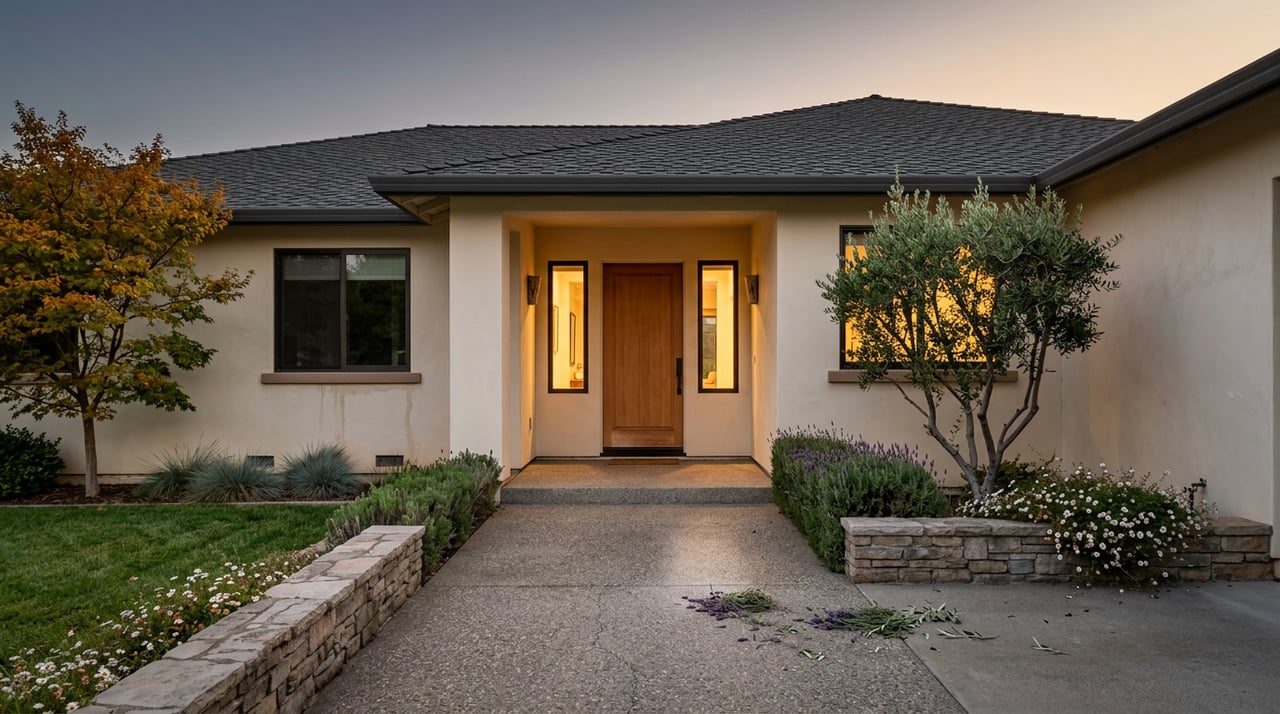
If you've toured new construction near Fremont's Five Corners this year, you've likely heard some version of the same line: close to the future Irvington BART station. It shows up in the description for the Central Park Terrace community, in the marketing for the Gettysburg Common townhomes, in agent copy across the district. It reads like a fact about infrastructure. It is closer to a fact about hope.
On January 28, 2026, BART Board President Melissa Hernandez sent a letter to State Senator Aisha Wahab, who had pushed the agency to apply for state construction funding for Irvington Station. Hernandez's answer was blunt. Proceeding with construction given the uncertainty around BART's own finances is not prudent, she wrote, and the agency sees real risk in including Irvington in an upcoming state grant application at all.
That's not a rumor. That's the transit agency responsible for building the station telling a sitting state senator, in writing, that this isn't the year.
Four Decades of "Future Station"
Irvington Station isn't a new idea that stalled. It's an old idea that has stalled repeatedly, on a timeline long enough to span a career:
- 1979 – The station is first studied as part of the Warm Springs extension.
- 1992 – The BART Board approves it.
- 2009 – Fremont tries to finance construction through redevelopment agency bonds. The bonds evaporate when California abolishes redevelopment agencies statewide.
- 2014 – Alameda County voters pass Measure BB, committing $120 million to the project, contingent on the station being fully defined and added to a future capital program.
- 2019 – The BART Board formally authorizes the station, targeting construction from 2022 to a 2026 completion.
- 2023 – The city's own timeline slips again: construction start pushed to mid-2026, opening pushed to 2031.
- 2026 – BART's board president tells a state senator that building it right now isn't prudent.
By the most recent public cost estimate, the station runs about $282 million to build. The $120 million from Measure BB is the only piece that's secured. Fremont has acquired 14 of the 17 properties the project needs. Design work reportedly reached roughly 90 percent completion years ago. What's missing is the other $160 million, and in January 2026 the agency responsible for closing that gap said now is not the time to try.
What Never Broke Ground Still Shows Up in Listings
None of this has stopped Irvington from being marketed as a transit neighborhood. New townhome communities near the historic Five Corners intersection, home to Clark's Hall and the century-old Irvington Monument, routinely cite proximity to the future station alongside real, existing amenities like Fremont Central Park, Kaiser and Washington Hospital, and the Apni Mandi Farmers Market.
The city's own planning documents lean on the same premise. According to correspondence Fremont officials sent regional planners, close to 680 units of affordable housing are under construction or in the approval pipeline specifically because of their adjacency to the planned station, on top of roughly 280 units already occupied nearby. Developers and city staff have treated the station's arrival as close enough to certain to justify building around it, years before a shovel has touched the site.
That's the part worth sitting with if you're comparing an Irvington purchase against other Fremont neighborhoods. A meaningful share of what makes new construction there feel forward-looking rests on an asset that doesn't exist yet, that the responsible agency just called imprudent to build, and that has missed its own completion date at least three times since 2019.
The One Fremont Station That Actually Opened
Compare that to Warm Springs, a few miles south. The Warm Springs/South Fremont BART station opened for revenue service on March 25, 2017. It is real, it is running, and it shows up in ridership numbers rather than renderings.
It also shows something else worth knowing before you anchor on a single price point: how noisy a small submarket's numbers can get, even with a working station. Redfin's neighborhood data shows Warm Springs single-family homes selling for a median of $1.9 million in February 2026, a swing described as up over 140 percent year over year, on just 11 sales that month compared to 17 the year before. A separate April 2026 read on the same pocket put the single-family median at $2.18 million with homes moving in 9 days at 105 percent of list. Zillow's broader estimate for the same area, which folds in more property types, put the average home value closer to $1.74 million, down slightly over the year. None of these numbers are wrong exactly. They're measuring a market small enough that a handful of closings can move the median by six figures in either direction.
Here's how the three districts line up when you separate what's built from what's promised:
| District | BART access today | What recent sales actually show | What's driving the number |
|---|---|---|---|
| Warm Springs | Open since March 2017 | Single-family medians ranged from roughly $1.9M to $2.18M across recent months, on as few as 9 to 17 sales | A real station, but a market small enough that one month's closings can swing the median by double digits |
| Irvington (94538) | Not built; the agency itself called construction "not prudent" for now | Active listings in June 2026 spanned roughly $995K to $2.5M, with a median list price near $1.45M | New construction and roughly 680 approved affordable units, built on the strength of a station promised since 1979 |
| Mission San Jose | Not part of the story; no transit angle at all | Median around $2M, with premium homes reaching $2.5M to $3M | School boundary geography, unchanged by any funding vote |
Citywide, Fremont's average home price ran about $1.35 million as of August 2026, down roughly 7.5 percent from a year earlier, with typical homes going pending in about 20 days. That's the baseline everything above is measuring against. Mission San Jose's premium has nothing to do with transit and hasn't needed a ballot measure to hold. Warm Springs has the infrastructure but a market too thin to read cleanly month to month. Irvington has neither the stability of the first nor the certainty of the second. It has a Five Corners address, real new construction, and a station that's been "future" for 45 years.
What the November Ballot Actually Decides
The reason BART is suddenly this cautious about a $282 million infill station traces back to its own operating budget, not to Irvington specifically. The agency balanced its FY26 budget with $35 million in cuts and has spent the year lobbying Sacramento for bridge loans while pinning its longer-term survival on a five-county sales tax measure headed to voters this November, organized under the banner Connect the Bay.
The mechanics matter for anyone weighing Fremont real estate against a station timeline. The measure would add a half-cent sales tax across Alameda, Contra Costa, San Mateo, and Santa Clara counties, with a one-cent tax in San Francisco, sunsetting after 14 years. Organizers cleared the signature threshold in May 2026 with roughly 305,000 signatures against a roughly 186,000 requirement, so the measure is headed to the ballot. If it passes, BART expects around $74 million for operations in the last quarter of fiscal year 2027 and roughly $310 million annually starting in fiscal year 2028.
If it fails, BART's own Alternative Service Plan, adopted in late February 2026, lays out how the agency closes a projected $376 million deficit: fare increases, a 40 percent reduction in system support services, roughly 1,200 layoffs, and station closures the board has not yet named but has reserved the right to decide. Systemwide, the agency has floated the possibility of cutting service by nearly 70 percent and closing between 10 and 15 stations if no new revenue shows up. Against that backdrop, a $160 million funding gap for an unbuilt infill station in Fremont isn't the agency's most pressing problem. It's arguably the least urgent one on the list.
Three Questions Before You Pay for a Promise
None of this means Irvington is a poor place to buy, and it doesn't mean the station will never come. It means the premium attached to "future BART access" deserves the same scrutiny you'd apply to any other unbuilt amenity. Before that language moves your offer, it's worth asking:
- Has construction actually started, or is the project still in the funding-and-design phase it's been in for years?
- Is the remaining cost fully funded, or is there a gap the way there currently is here, with only $120 million of a $282 million estimate secured?
- What has the responsible agency said publicly and recently, not what a listing description implies?
For Irvington today, the honest answers are: no, no, and the agency itself just called it imprudent to proceed.
A couple of things buyers ask
Does this affect homes that are already built in Irvington? Not directly. Existing homes and completed townhome communities are valued on schools, commute routes that already exist, and the neighborhood's established character around Five Corners. The open question is specifically about how much extra weight to give a station that hasn't broken ground.
Could Warm Springs lose service if the November measure fails? BART has said station closures are possible under its Alternative Service Plan but has not named specific stations, and any closure decision rests with the board rather than staff. It's a real risk worth watching, not a settled outcome.
Fremont's five original townships each price differently for reasons that have nothing to do with each other, and the gap between what a listing implies and what an agency has actually funded is exactly the kind of detail that's easy to miss from a search results page. If you're weighing Irvington against Warm Springs or Mission San Jose, or trying to figure out what a specific address is really priced on, Rathore Homes can walk through the comparison street by street. Let's Connect.