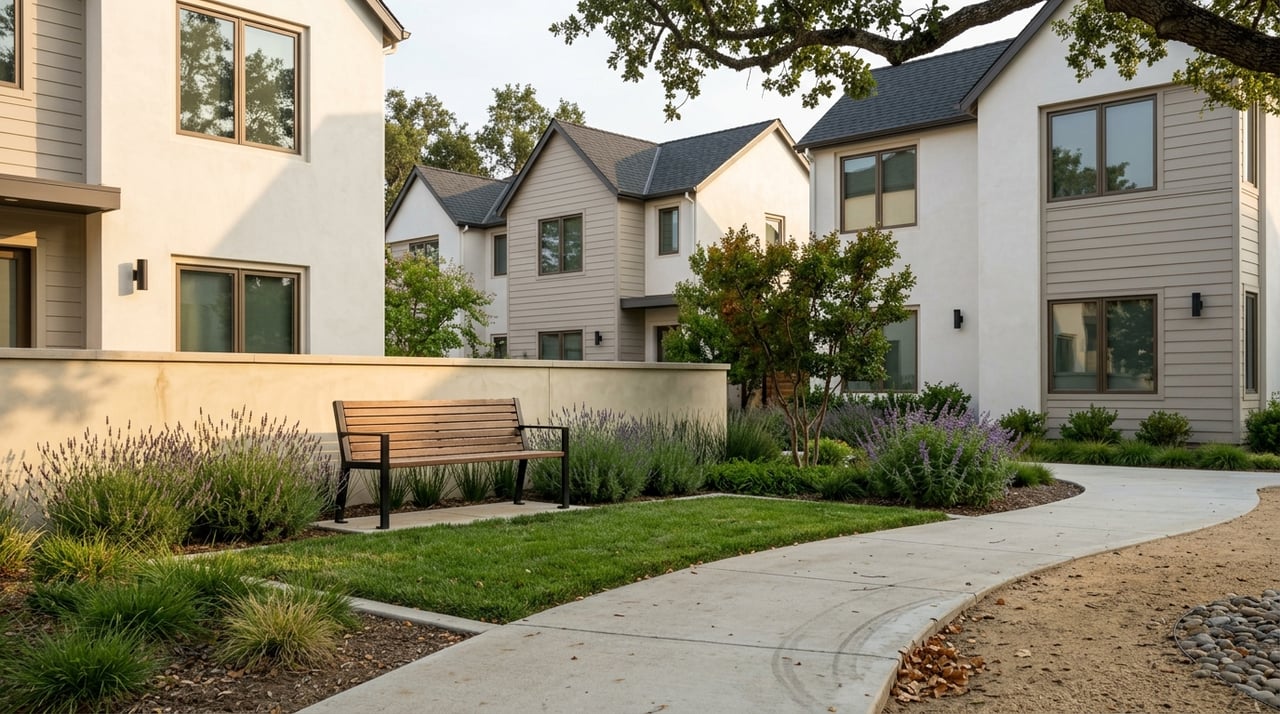
Wondering what day-to-day life in San Ramon really feels like? If you are comparing East Bay communities, this city often stands out for its balance of outdoor access, commuter convenience, and a polished suburban feel. Understanding how those pieces fit together can help you decide whether San Ramon matches your lifestyle, so let’s dive in.
San Ramon at a Glance
San Ramon is an 18-square-mile city in Contra Costa County with more than 83,000 residents. It also has a large daytime workforce, with more than 21,000 commuters coming into the city, which gives it a strong employment presence alongside its residential character.
That mix shapes the feel of the city. You get neighborhoods and everyday routines that feel suburban, but you also see a clear connection to office corridors, shopping hubs, and regional commuting patterns.
Parks and Open Space in San Ramon
One of San Ramon’s biggest lifestyle strengths is how easy it is to get outside. The city says it has more than 40 trails, and its open-space system helps preserve the rolling hills and natural edges along both the east and west sides of town.
That setting gives San Ramon a more open feel than you might expect from a city with a strong job base. Areas around Tassajara Valley, Bollinger Canyon, and Bishop Ranch Regional Preserve all contribute to that sense of space.
Central Park and Memorial Park
Central Park is one of the city’s best-known gathering places. It spans 40.8 acres and includes picnic areas, fields, a participatory fountain, tennis, basketball, volleyball, pickleball, soccer, baseball and softball spaces, plus trail access.
Memorial Park adds another popular option with 16.3 acres that include a dog park, bocce, a playground, picnic space, and a sports field. For many residents, these parks support both everyday routines and weekend plans without needing to leave town.
Trails and Larger Preserves
If you enjoy walking, biking, or longer outdoor outings, the trail network is a major plus. The Iron Horse Trail runs 4.5 miles through San Ramon and connects the city to a broader regional corridor.
For larger open-space experiences, Bishop Ranch Open Space Regional Preserve covers 806 acres. That gives you access to a more expansive landscape when you want something beyond neighborhood parks and shorter local trails.
Community Life Beyond the Parks
In San Ramon, parks are not just green space. They also function as community gathering places that help shape the city’s social rhythm throughout the year.
The city hosts summer concerts at the Central Park Amphitheater and the annual Art & Wind Festival at Central Park. These events bring together arts, music, kite flying, food, and outdoor fun in a way that adds real texture to daily life.
Central Park as a Civic Hub
The San Ramon Community Center at Central Park adds another layer to the experience. It includes indoor and outdoor event space, a two-story art gallery, and public Wi-Fi, making it more than just a park building.
That matters because it gives the city a civic space for meetings, celebrations, arts programming, and community events. It helps San Ramon feel more complete and connected, rather than simply residential on one side and office-driven on the other.
San Ramon Commutes and Regional Access
If you are thinking about living in San Ramon, commuting is an important part of the picture. The city is closely tied to the I-680 corridor, and its transportation setup is more bus-and-car oriented than rail-centered.
In practical terms, San Ramon does not have its own local rail station. People who use rail typically connect through nearby Dublin/Pleasanton BART or Walnut Creek BART rather than boarding in San Ramon itself.
Transit Center and Bus Connections
The San Ramon Transit Center is designed to support multimodal commuting. It offers parking and bike lockers, and the city promotes park-and-ride commuting as a practical way to leave your car behind and continue by express bus.
County Connection provides several key regional links on weekdays, including:
- Route 21 between Walnut Creek BART and the San Ramon Transit Center
- Route 35 between the San Ramon Transit Center and Dublin/Pleasanton BART
- Bishop Ranch routes 96X and 97X for peak weekday service to Walnut Creek BART and Dublin/Pleasanton BART
- Route 92X between the San Ramon Transit Center, Danville park-and-ride areas, and the Pleasanton ACE station
The city also promotes commute incentives through 511 Contra Costa. For many residents, this setup creates flexibility, especially if you want options beyond driving the full route yourself.
What the Commute Setup Means for You
San Ramon is commuter-friendly, but it helps to think of it accurately. This is not a rail-first city where you walk to a station in the center of town.
Instead, it works well for people who are comfortable with freeway access, park-and-ride options, bus connections, and nearby regional rail stations. If that matches your routine, the city can offer a practical balance between residential living and broader Bay Area access.
Shopping, Dining, and Daily Convenience
San Ramon’s commercial life is heavily shaped by Bishop Ranch. This area is the city’s main employment and mixed-use center, and it plays a major role in how people shop, dine, and spend time close to home.
According to its official site, Bishop Ranch spans 585 acres with 5 million square feet of office space and 1 million square feet of retail and entertainment, along with planned housing and hotels. That concentration gives San Ramon a strong central destination for both work and daily convenience.
City Center Bishop Ranch
City Center Bishop Ranch brings many of the city’s shopping and dining options into one hub. The project adds 300,000 square feet of retail, dining, and entertainment space, with uses that can support errands, coffee runs, dinners out, and evening plans.
Current directory listings include places such as Salt & Straw, Delarosa, Philz Coffee, Slanted Door, George, SandboxVR, and Heller Jewelers & Rolex. For residents, that means many everyday and leisure needs are concentrated in a single, polished destination.
Jobs and the Local Economy
San Ramon is not just a bedroom community. The city has a notable employment base, and that contributes to its daytime energy and overall economic stability.
The city’s October 2025 top-employers page lists Pacific Gas & Electric, Chevron USA, BMO Bank, San Ramon Regional Medical Center, Five9, Peak Mental Health, Primed Management Consultants, UPS, Robert Half, and Target among the largest employers. The city also identifies energy, health care, technology, finance, and logistics as key local industry clusters.
For buyers, this matters because it shows that San Ramon’s lifestyle is supported by more than housing alone. Employment, services, retail, and recreation all play a role in the city’s day-to-day function.
Housing Patterns Across San Ramon
If you are exploring homes in San Ramon, it helps to know that the city is not all one style. Planning documents show a clear difference between older westside neighborhoods and newer master-planned areas.
In general, older westside areas tend to feel more established and more lot-oriented. Newer planned sections often include a broader mix of attached and detached housing types.
Westside and Established Areas
The Westside Specific Plan covers about 3,300 acres, much of it open hillside at the city’s west gateway. The city’s planning materials cite low-density residential examples such as Twin Creeks Hills and Royal Ridge, while other westside areas include lower-medium and medium-density housing formats.
Those formats can include detached homes, zero-lot-line homes, garden patio homes, and townhomes. If you prefer an area with a more established pattern, the west side may feel meaningfully different from some of the city’s newer sections.
Newer Planned Areas and Mixed Housing
Newer or evolving areas offer a wider housing mix. Planning materials for Dougherty Valley, the Northwest Specific Plan area, the Preserve and Faria Preserve project, and City Village at Bishop Ranch 6 reference combinations of single-family homes, townhomes, condominiums, senior apartments, detached row homes, and detached courtyard homes.
That variety can be especially helpful if you want options across different life stages or maintenance preferences. The city’s own quality-of-life messaging summarizes this well by noting that San Ramon offers housing choices ranging from condos to single-family homes.
What Living in San Ramon Feels Like
San Ramon tends to appeal to people who want a suburban setting with visible structure and convenience. You have outdoor space, a major shopping and dining hub, a meaningful employment base, and commuter systems that connect outward even without an in-city rail stop.
It is also a city where lifestyle can vary by subarea. Some parts feel more established and residential, while others feel more connected to newer planning, mixed housing, and the Bishop Ranch corridor.
That is why it helps to look beyond the city name alone. If you are buying or selling in San Ramon, the best strategy is to match the specific neighborhood pattern, housing type, and commute setup to your real day-to-day priorities.
If you want help thinking through which part of San Ramon best fits your goals, Meenakshi Rathore offers personalized guidance with a calm, local, and practical approach.
FAQs
What is San Ramon known for in everyday life?
- San Ramon is known for its balance of suburban neighborhoods, more than 40 trails, major park spaces, Bishop Ranch shopping and employment, and strong access to the I-680 corridor.
How do most people commute from San Ramon?
- Many commuters use cars, park-and-ride options, and weekday bus connections through the San Ramon Transit Center, with nearby rail access typically coming from Dublin/Pleasanton BART or Walnut Creek BART.
What parks are popular in San Ramon?
- Central Park and Memorial Park are two well-known local options, and the Iron Horse Trail plus Bishop Ranch Open Space Regional Preserve add more room for walking, biking, and outdoor recreation.
What is Bishop Ranch in San Ramon?
- Bishop Ranch is San Ramon’s main employment and mixed-use center, with large office space, retail, entertainment, planned housing, and the City Center Bishop Ranch shopping and dining hub.
What kinds of homes are found in San Ramon?
- San Ramon includes a range of housing types, including single-family homes, townhomes, condominiums, detached row homes, courtyard homes, and some senior apartment options, with different patterns in older westside and newer planned areas.
Is San Ramon a good fit for buyers who want outdoor access?
- San Ramon can be a strong fit if outdoor access matters to you, since the city offers more than 40 trails, major parks, preserved open space, and convenient access to larger regional preserve areas.