If you are thinking about buying in Foster City, one question can shape almost everything else: Do you want to live on the water, near the water, or away from it? That choice affects your daily routine, your budget, your upkeep, and even the kind of home that feels right for this stage of life. The good news is that Foster City gives you several ways to enjoy its lagoon-centered setting, and understanding the tradeoffs can help you choose with more confidence. Let’s dive in.
Why Foster City Feels Different
Foster City stands out because of its man-made lagoon system. According to the city, the lagoon functions as a drainage detention basin of about 212 acres with roughly 16.5 miles of shoreline, and that shoreline includes seven parks with beaches, boardwalks, picnic areas, and boat-launch ramps.
That setup shapes the local lifestyle in a very specific way. In Foster City, waterfront living usually means lagoon-front or canal-side living rather than open-ocean living. For you as a buyer, that often translates into water views, shoreline trails, nearby parks, and managed recreational access.
The city also allows recreation such as swimming, windsurfing, paddle boarding, kayaking, and electric boating on the lagoon. Gas-powered boats are restricted except for city and EMID maintenance and safety boats, which helps reduce fuel-spill risk and wake damage.
What Waterfront Really Means Here
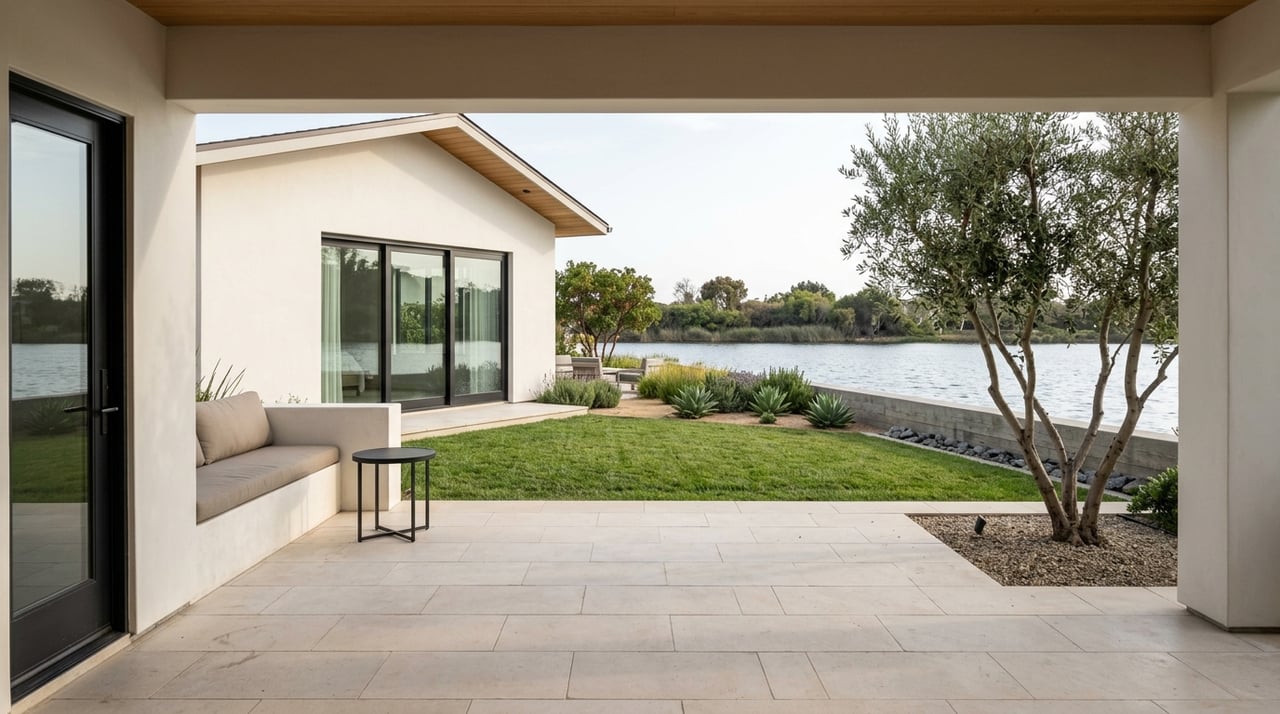
When buyers hear the word waterfront, they do not always picture the same thing. In Foster City, direct waterfront typically means a home or condo that fronts the lagoon or canal, sometimes with features like a private dock, a patio or balcony facing the water, or close access to launch points.
That can create a strong day-to-day connection to the setting. You may wake up to water views, step outside to a shoreline path, or enjoy being close to the kinds of outdoor activities that make Foster City unique.
At the same time, the lagoon is not passive scenery. The city’s Lagoon Management Plan says water levels are controlled seasonally, water is exchanged weekly or monthly, algae is managed with dye and, on rare occasions, herbicide, and bacteria is monitored at lagoon beaches.
Comparing Waterfront, Adjacent, and Interior Homes
Waterfront Homes
If your top priority is lifestyle, direct-water homes often offer the strongest appeal. Current listings highlighted in the research include waterfront condos with lagoon views, waterfront patios or balconies, and kayak-launch access.
These homes can feel special because the water is part of your everyday environment, not just a weekend destination. They may also sit in communities with amenities and HOA coverage that help support exterior or common-area maintenance.
The tradeoff is usually cost. Research examples include a Juno Lane condo listed at $1,348,888 with $680 monthly HOA dues and a Balboa Lane condo listed at $1,399,000 with $975 monthly HOA dues.
Best fit for waterfront
Waterfront may be the right fit if you:
- Want the strongest daily connection to the lagoon
- Value views and outdoor access highly
- Are comfortable paying a premium for location
- Prefer a condo or townhome lifestyle with HOA support, if applicable
Lagoon-Adjacent Homes
Lagoon-adjacent is not a formal city category, but it is a useful way to think about homes that are close to the shoreline without being directly on it. In practical terms, this often means you are near trails, parks, beaches, boardwalks, or water views while avoiding the highest premium for direct frontage.
For many buyers, this is the middle ground that makes the most sense. You still get much of the visual appeal and easy access to the lagoon-centered lifestyle, but you may have more flexibility on price, layout, or property type.
This option can work especially well if you want convenience and scenery without feeling like the home itself needs to revolve around the water. It is often a smart compromise between experience and budget.
Best fit for lagoon-adjacent
Lagoon-adjacent may be the right fit if you:
- Want easy access to shoreline parks and trails
- Like the feel of Foster City’s waterfront setting
- Prefer to balance lifestyle with budget
- Do not need direct frontage to enjoy the area
Interior Homes
Interior homes in Foster City often appeal to buyers who want a more conventional suburban rhythm. You may still be within a short distance of parks and lagoon amenities, but your home experience is less centered on water views and shoreline activity.
This can bring real advantages. Interior locations may offer more privacy, fewer water-specific maintenance concerns, and in many cases a lower price point than the most desirable direct-water homes.
That distinction matters in a market with a broad pricing range. Zillow’s neighborhood data shows Foster City medians ranging from about $1.02 million to $2.19 million, which reinforces how much micro-location and property type can affect value.
Best fit for interior homes
Interior homes may be the right fit if you:
- Want to maximize value within Foster City
- Prefer a more traditional residential setting
- Care more about privacy than water views
- Want to limit waterfront-specific upkeep
What to Know About Upkeep
One of the most important differences between waterfront and non-waterfront living is maintenance. Because much of the shoreline is privately owned and many properties have private boat docks, waterfront ownership can come with extra responsibilities tied to decks, docks, patios, windows, and landscaping near the water.
That does not mean waterfront is a poor choice. It just means the home may need a different kind of attention than an inland property, especially over time.
If you are looking at a condo or townhome, HOA structure becomes especially important. The Juno Lane example in the research shows HOA dues covering garbage, landscaping, common-area and exterior maintenance, roof, sewer, and water, which can simplify some aspects of ownership while adding a recurring monthly cost.
Flood Protection Matters Too
Water draws many buyers to Foster City, but infrastructure should be part of your decision as well. The city says its levee system is primarily for flood protection, and FEMA has certified the levee as protecting the 1% annual chance base flood.
The city also states that land within city limits is classified as Zone X, where mandatory flood insurance is not required. In February 2024, Foster City completed its Levee Improvements Project, which increased levee height and width to preserve FEMA accreditation and improve resilience for sea-level-rise projections through 2100.
For you as a buyer, that means Foster City’s waterfront appeal exists within an active flood-protection framework. Even so, long-term climate resilience is still worth understanding as part of your overall comfort level with a location.
How Pricing Shapes the Decision
Foster City remains a competitive Peninsula market. Redfin reports that homes receive about 3 offers on average and sell in around 14 days, while Zillow says homes go pending in about 20 days as of June 30, 2026.
Pricing also covers a wide range. Zillow places Foster City’s typical home value at $1,876,468, while Redfin reports a recent median sale price of $1.554 million.
Recent listing examples in the research span from $799,000 to $2,818,000, including waterfront condos and higher-priced direct-water homes. A recent waterfront single-family home on Shooting Star Isle sold for $2,498,000, which helps illustrate how direct-water locations can sit near the top of the local range.
The key takeaway is simple: in Foster City, location inside the city can matter almost as much as the city itself. A home’s relationship to the lagoon can shape both your experience and your price point.
How to Choose the Right Fit
If you are unsure which type of location fits you best, start with your daily life rather than the listing photos. Ask yourself what you want your routine to feel like, what level of maintenance feels comfortable, and how much of your budget you want to dedicate to views and waterfront access.
A simple way to think about it is this:
- Choose waterfront if views and lagoon access are central to your lifestyle goals.
- Choose lagoon-adjacent if you want a balance of scenery, convenience, and price.
- Choose interior if value, privacy, and lower water-specific upkeep matter most.
There is no one-size-fits-all answer. The best Foster City home is the one that matches how you want to live, not just what looks appealing on paper.
If you want help weighing waterfront, lagoon-adjacent, or interior options in Foster City, Meenakshi Rathore can guide you through the tradeoffs with clear advice and a personalized plan.
FAQs
What does waterfront living in Foster City usually mean?
- In Foster City, waterfront living usually means lagoon-front or canal-side living rather than open-ocean living, with access shaped by shoreline paths, parks, and lagoon recreation.
Are Foster City waterfront homes more expensive than interior homes?
- Research suggests direct-water homes often sit near the top of the local price range, while attached waterfront homes may be somewhat more accessible but can include meaningful HOA dues.
Do Foster City waterfront homes require more maintenance?
- Waterfront homes can involve more property-specific upkeep, especially for features like docks, decks, patios, windows, and landscaping near the water.
Is flood insurance required for homes in Foster City?
- The city states that land within Foster City is classified as Zone X, where mandatory flood insurance is not required citywide.
How competitive is the Foster City housing market for buyers?
- Foster City is a competitive market, with Redfin reporting about 3 offers on average and homes selling in around 14 days, while Zillow says homes go pending in about 20 days.
Should you choose waterfront or interior living in Foster City?
- Waterfront may be the better choice if you prioritize views and lagoon access, while interior living may be a better fit if you value privacy, a more conventional setting, and potentially lower water-specific upkeep.